
Home » Reasons to Use Ground Protection Mats on Worksites
Reasons to Use Ground Protection Mats on Worksites
- Author: Balance Lee
- 9+ Years of Manufacturing
A worksite can change quickly when weather, heavy equipment, and ground conditions come together. A surface that looks stable in the morning may become muddy, uneven, or difficult to access after rainfall or repeated vehicle traffic.
Ground protection mats provide a temporary solution to create safer access routes, reduce surface damage, and keep equipment moving in challenging conditions. Whether you are managing a construction site, outdoor event, utility project, or temporary access road, choosing the right ground protection system can help you avoid unnecessary cleanup and restoration work after the project is completed.
In this guide, you will learn why ground protection mats are used on worksites, what problems they solve, and when investing in them can bring real value to your project.
Table of Contents
Prevent Ruts, Soil Compaction, and Surface Damage
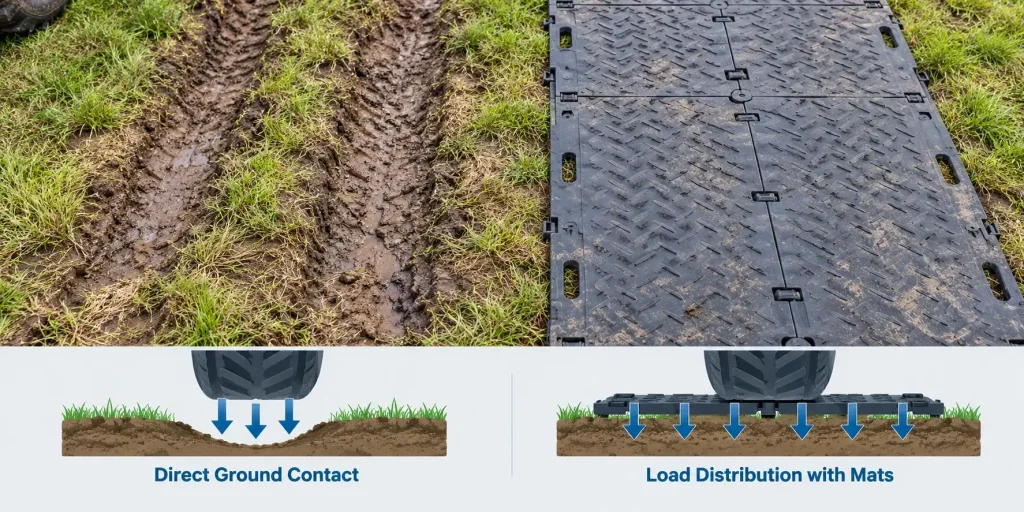
When heavy equipment enters an outdoor worksite, the ground condition becomes one of the first factors affecting project efficiency. A truck, excavator, or lifting machine may not damage a surface immediately on firm soil, but the situation can change quickly after rainfall or repeated traffic. The combination of heavy loads, concentrated tire pressure, and soft ground conditions can create deep ruts, disturb the soil structure, and leave lasting marks on finished areas.
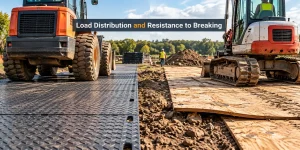
Ground protection mats help distribute equipment loads over a larger contact area, reducing direct pressure on the surface. Instead of allowing tires or tracks to continuously dig into the soil, the mats create a more stable temporary working layer between the equipment and the ground.
For example, on landscaping projects or construction sites near completed areas, even several days of vehicle movement can turn a grass surface into a damaged area that requires grading, soil replacement, or replanting. In these situations, installing ground protection mats before heavy traffic begins can reduce unnecessary restoration work after the project.
The actual protection level depends on several factors, including vehicle weight, ground conditions, mat thickness, support underneath the mat, and traffic frequency. For example, HDPE ground protection mats in the 12.7–15 mm thickness range are commonly considered for temporary pedestrian access, landscaping projects, and light to moderate equipment movement when ground conditions are suitable.
For heavier vehicles, repeated traffic, or softer soil conditions, thicker mats such as 18–25 mm or customized solutions may be considered after evaluating the actual load requirements and site conditions.
Beyond protecting the visible surface, reducing soil disturbance also helps maintain a more predictable working environment. This is especially valuable for projects where access routes need to remain usable throughout different weather conditions.
Create Safer Traction and More Stable Access
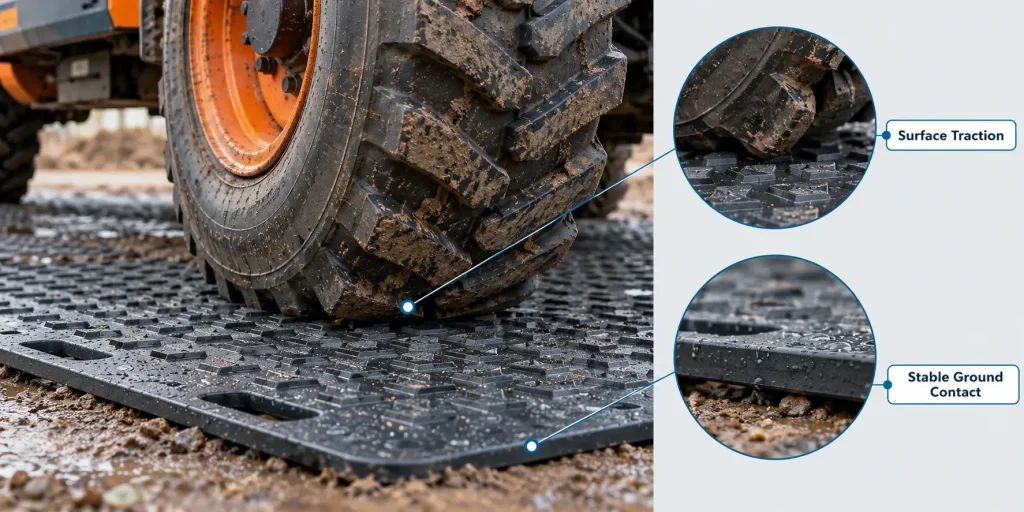
Protecting the ground is only part of the challenge on a worksite. In many outdoor projects, the bigger concern is whether workers and equipment can move safely and consistently when the surface becomes wet, uneven, or unstable.
Mud, loose soil, and standing water can reduce tire traction and make equipment movement less predictable. Vehicles may experience reduced traction, require additional maneuvering to pass through certain areas, or cause further surface disturbance when operating on unstable ground. For workers, walking across soft or slippery ground can also increase the risk of slips and unstable footing.
Ground protection mats can help create a more stable temporary access surface and improve access conditions in suitable applications. The textured surface design can provide additional grip for tires, tracks, and pedestrian traffic, while the underside pattern helps improve contact between the mat and the ground.
In outdoor applications such as construction sites, festivals, utility work, and landscaping projects, surface conditions are often a key factor in determining whether a temporary access route remains practical. A route that works well in dry weather may become difficult to operate after several days of rain without proper ground support.
Different surface designs can also affect performance. Double-sided textured mats can be considered for projects where both driving performance and installation requirements need to be balanced. One textured side can provide a suitable traffic surface, while the opposite side can help improve contact with the ground.
However, traction performance is not determined by the mat surface alone. Factors such as soil type, slope, equipment type, weather conditions, and installation method all influence the final result. Selecting the appropriate mat design for the working environment helps create safer and more reliable temporary access throughout the project.
Keep Equipment Moving in Mud and Soft Ground
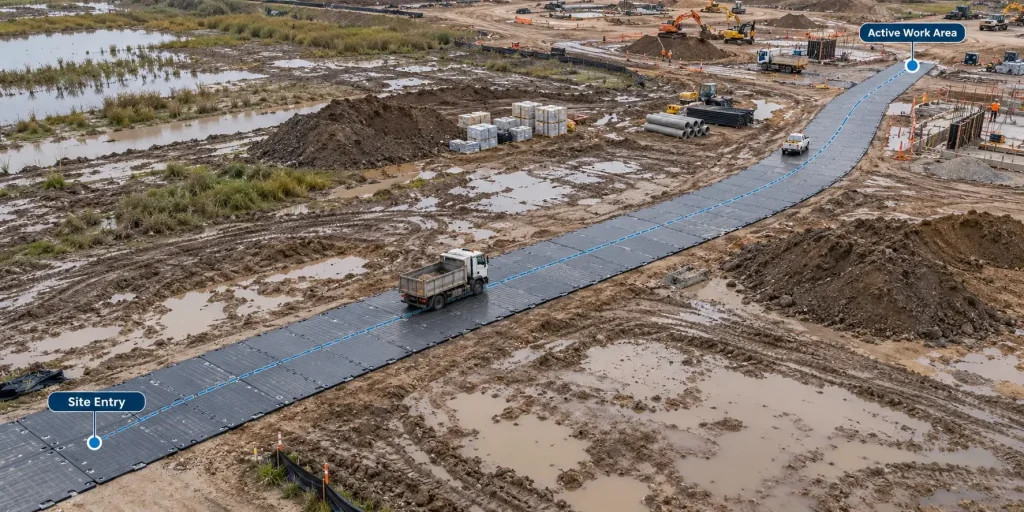
For many worksites, the biggest challenge is not getting equipment to the site — it is keeping it moving once ground conditions become difficult. After heavy rain or during work in naturally soft areas, vehicles and machinery may lose mobility because the surface cannot provide enough support for repeated traffic.
When trucks, excavators, cranes, or other heavy equipment operate directly on soft ground, tires and tracks can sink into the surface. This not only slows down daily operations but can also create delays caused by recovery work, additional grading, or temporary access repairs.
Ground protection mats can help create a more stable temporary access surface by distributing loads and improving equipment mobility in challenging conditions. By reducing direct contact between heavy equipment and unstable soil, mats allow vehicles to pass through areas that may otherwise become difficult or impossible to access.
This is especially valuable for projects where continuous access is important, such as construction sites, pipeline installation, mining areas, temporary roads, and outdoor events. A blocked access route can affect more than transportation — it may delay material delivery, equipment scheduling, and the entire project timeline.
In mining and infrastructure projects, temporary access routes need to be selected based on actual site conditions rather than a single performance factor. Vehicle weight, soil strength, traffic frequency, ground moisture, and expected operating conditions all influence whether a ground protection system is suitable for a specific application.
For projects involving challenging environments, such as muddy areas or significant temperature variations, these factors should be reviewed together with the required mat specification and installation method before use.
The suitable mat specification depends on the equipment weight, soil condition, expected traffic frequency, and support requirements. For example, a thicker HDPE mat with stronger load distribution capability may be more suitable for heavy vehicles or weak ground, while lighter applications may require a different balance between thickness, handling weight, and installation efficiency.
By maintaining reliable access, ground protection mats help reduce interruptions and keep equipment operating according to the planned workflow, even when ground conditions are less than ideal.
Reduce Cleanup, Repair, and Site Restoration Costs
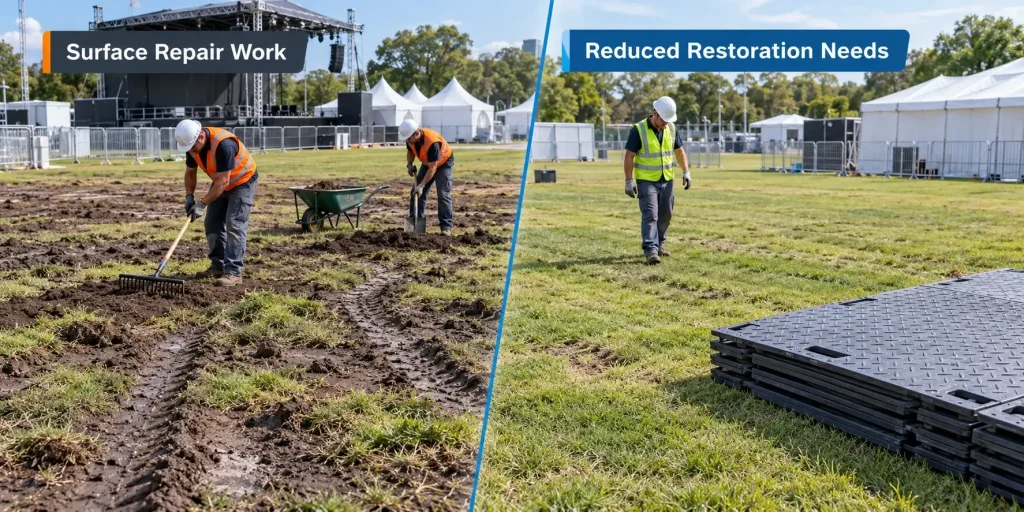
The cost of a worksite is not limited to daily operations. In many projects, the final stage after equipment leaves the site can also require significant time and resources, especially when the ground has been damaged during construction.
Without proper ground protection, heavy traffic may leave behind deep tire marks, compacted soil, damaged grass, muddy access areas, or uneven surfaces. Restoring these areas can involve additional work such as grading, adding new soil, repairing landscaping, cleaning surrounding roads, or waiting for the surface to recover naturally.
Ground protection mats help shift the focus from repairing damage after construction to preventing unnecessary damage before it happens. By creating a temporary working surface, they allow vehicles and equipment to operate while reducing direct impact on the original ground conditions.
This difference is particularly important for projects near finished landscapes, commercial properties, public areas, or locations where the appearance of the site matters. For example, an outdoor event may last only a few days, but restoring damaged grass or landscaped areas afterward can require additional labor and coordination that was not included in the original plan.
The value of ground protection is not only related to the initial cost of the mats. In many projects, preventing avoidable surface disturbance can help reduce the amount of cleanup, repair, and restoration work required after completion.
The overall cost impact depends on the project type, site conditions, traffic frequency, and restoration requirements. For contractors working across multiple sites, reusable HDPE ground protection mats may provide additional practical value because they can be deployed for different projects when properly maintained.
Considering the complete project cycle — installation, operation, removal, and site recovery — ground protection mats can become a practical investment rather than just an additional site expense.
Protect Equipment, Utilities, and Sensitive Areas
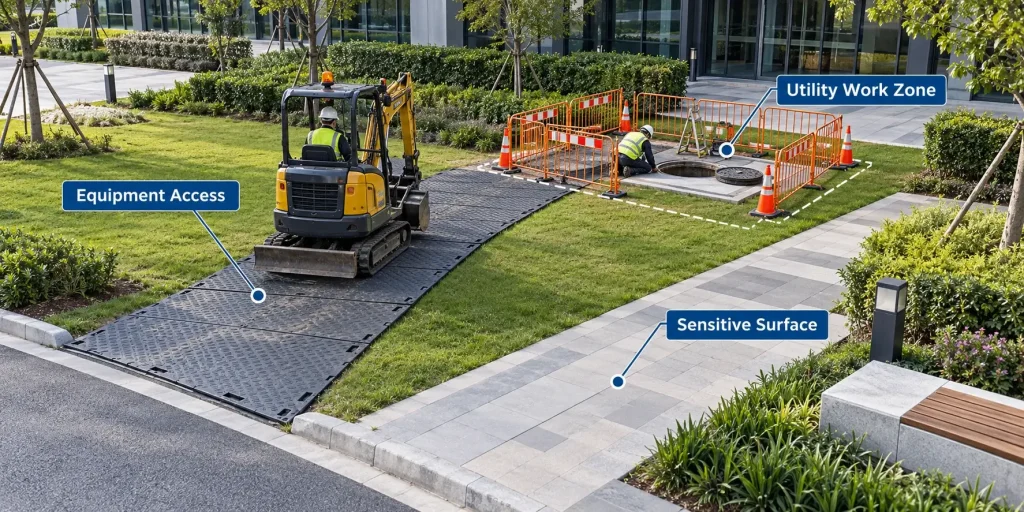
Ground protection is not only about preventing visible damage to grass, soil, or finished surfaces. In many projects, the more important concern is protecting the surrounding environment and infrastructure that may be affected by heavy traffic.
Construction areas can include elements that require additional attention, such as underground utilities, landscaped areas, pedestrian zones, existing pavement, drainage systems, and completed sections of a property. Heavy vehicles moving directly across these areas may create pressure points that lead to surface damage or unnecessary disturbance.
Ground protection mats provide a temporary barrier between equipment and the working environment, helping reduce the impact of vehicle movement on sensitive areas. By distributing loads more evenly, they can help protect surfaces that are not designed for continuous heavy traffic.
For example, when construction work takes place near commercial buildings, residential areas, or public spaces, the goal is not only to complete the work efficiently but also to minimize disruption to the surrounding area. A temporary access route made with ground protection mats can help separate active construction traffic from areas that need to remain clean and accessible.
In utility and infrastructure projects, this protection can be especially valuable. Temporary access may be required for trucks, excavators, or maintenance equipment while avoiding unnecessary disturbance to nearby landscaping, roadsides, or finished surfaces.
In many site applications, ground protection mats are considered not only when access becomes impossible, but also when project teams need better control over the working environment. Using a designated access route can help separate equipment movement from surrounding areas that require protection and reduce unnecessary surface disturbance during construction activities.
The right solution still depends on the specific site conditions. Factors such as equipment load, surface sensitivity, traffic duration, and access requirements should be considered together when selecting ground protection products.
Ground protection mats can help create a controlled access route around sensitive areas, but they should not be considered a replacement for underground utility assessment. Before allowing vehicles to cross areas with buried services, covers, trenches, or similar structures, the site conditions and allowable loads should be confirmed.
Support Reuse and Reduce Disposable Material Waste
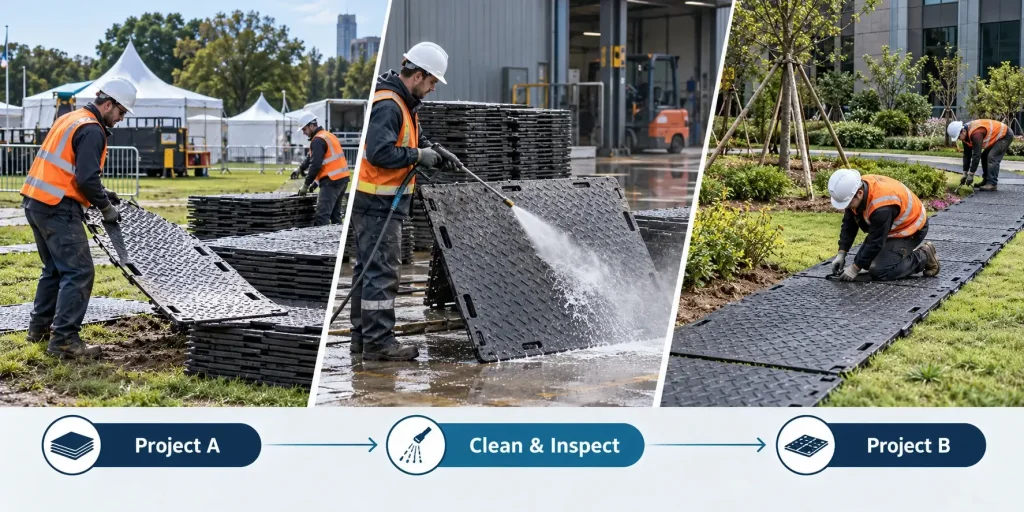
As construction and outdoor projects place more attention on resource efficiency, the value of a temporary protection solution is no longer limited to a single use. The ability to reuse materials across different projects has become an important factor when contractors evaluate long-term operating costs.
Some temporary ground protection methods may require replacement after one project because they are difficult to clean, store, or transport. In contrast, HDPE ground protection mats are designed for repeated handling and reuse when properly selected, installed, and maintained.
After a project is completed, mats can be removed, cleaned, inspected, and prepared for the next application. This makes them suitable for contractors, rental companies, and event service providers who need temporary access solutions across multiple sites.
From the projects we have followed, the most of customers consider reuse capability when comparing different ground protection options. A mat that can be used again for future construction sites, outdoor events, or maintenance work can provide value beyond the initial purchase price.
The service life of ground protection mats depends on many practical factors, including mat thickness, traffic intensity, equipment weight, surface conditions, handling methods, and storage environment. For example, mats used under heavy vehicles on rough terrain will experience different wear compared with mats used for pedestrian access or light-duty applications.
Material selection also plays an important role. HDPE is resistant to moisture, corrosion, and many common outdoor conditions, which helps the mats remain suitable for repeated outdoor use. At the end of their usable life, HDPE materials can also enter established plastic recycling systems where available.
Choosing reusable ground protection products does not mean every project requires the same solution. The right approach is to balance performance requirements, expected usage frequency, and total project cost rather than focusing only on the initial purchase price.
When Ground Protection Mats Are Worth the Investment
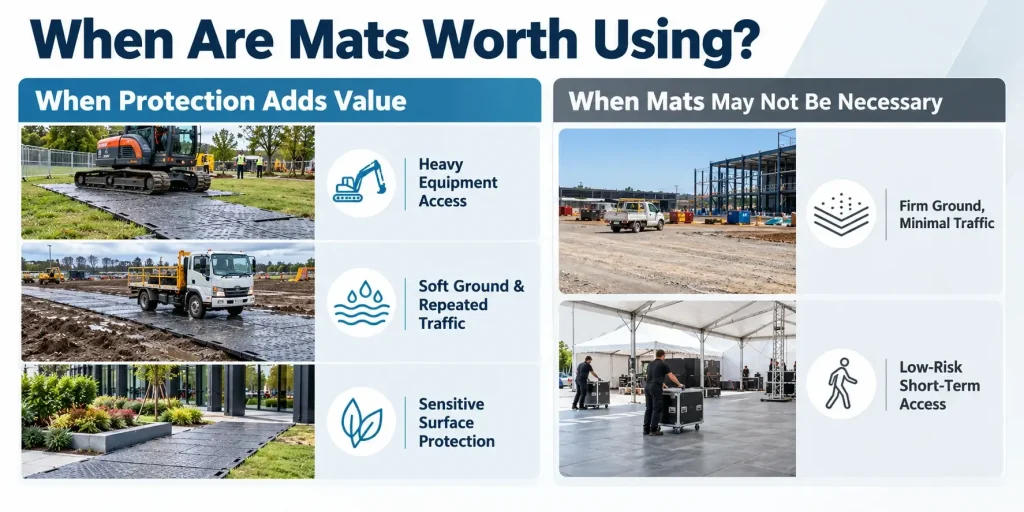
Ground protection mats are not required for every worksite. The decision usually depends on the relationship between the cost of protection and the potential problems caused by ground damage, restricted access, or project delays.
For a site with firm, dry ground and limited traffic, additional ground protection may not be necessary. However, when a project involves heavy equipment, unstable ground conditions, repeated vehicle movement, or areas where surface damage must be avoided, ground protection mats can provide practical value.
Before choosing a solution, it is important to evaluate several factors:
- Equipment weight and traffic frequency – Heavy trucks, cranes, and tracked machinery create higher pressure on the ground, especially when passing through the same route repeatedly.
- Ground conditions – Wet soil, soft terrain, grass areas, and recently prepared surfaces are more likely to be damaged by construction traffic.
- Project duration – Temporary access needed for several days may require a different solution from access routes used for months.
- Surface protection requirements – Projects near finished landscapes, public areas, or commercial properties place higher importance on minimizing visible damage.
From our communication with contractors and project teams, we have noticed that the decision is not only about whether the equipment can physically enter the site. The bigger question is whether the project can maintain reliable access while avoiding additional restoration work afterward.
For example, a contractor working on a short-term outdoor project may initially consider ground protection as an extra expense. However, when the potential costs of repairing damaged lawns, removing mud, delaying schedules, or bringing additional equipment for recovery are considered, the overall project value can change.
The right ground protection solution is not simply the thickest or strongest mat available. It is the option that matches the actual working conditions, including load requirements, terrain, traffic pattern, and reuse expectations.
By evaluating these factors before construction begins, you can choose a ground protection system that supports safer operations, protects the site, and delivers better value throughout the entire project cycle.
FAQs
Do ground protection mats prevent soil compaction?
Ground protection mats can reduce soil compaction, but they do not completely eliminate it. Their main function is to distribute equipment loads over a larger area, which helps reduce concentrated pressure on the ground surface.
The actual effect depends on factors such as equipment weight, soil type, moisture level, traffic frequency, and mat support conditions. For example, wet clay soil under repeated heavy vehicle traffic will behave differently from dry compact ground.
By creating a stable working layer between equipment and the soil, ground protection mats help reduce deep tire marks, surface disturbance, and unnecessary soil damage during temporary access.
Are ground protection mats safer than plywood?
For outdoor ground protection applications involving repeated traffic or wet conditions, HDPE ground protection mats can provide advantages over plywood because they are designed for more demanding temporary access environments.
Compared with plywood, HDPE ground protection mats have low water absorption and better resistance to moisture exposure, which can help maintain more consistent performance in wet outdoor conditions. Their textured surfaces can also provide a more stable contact surface for equipment and pedestrian traffic.
Plywood performance can vary depending on the grade, thickness, and exposure conditions. Under repeated outdoor use, especially in wet environments, plywood may become damaged, lose stiffness, or require replacement sooner than materials designed for repeated ground protection applications.
However, the better choice depends on the application. For short-term light-duty protection, plywood may be a suitable option. For wet environments, frequent equipment access, or projects requiring multiple uses, HDPE ground protection mats may provide a more durable and practical solution for these applications.
Can mats prevent heavy equipment from getting stuck?
Ground protection mats can reduce the risk of heavy equipment getting stuck, but they are not a replacement for proper ground engineering in extreme conditions.
By creating a firmer temporary surface and distributing loads, mats help vehicles maintain movement on soft or unstable ground. This can be especially useful for temporary access routes, construction areas, and outdoor projects affected by rainfall.
The result depends on the equipment weight, soil conditions, slope, and mat specification. For very heavy equipment or extremely soft ground, additional measures such as thicker mats, improved support layers, or site preparation may be required.
Do ground protection mats protect asphalt?
Yes, ground protection mats can help protect asphalt surfaces from concentrated loads, impact, and surface damage during temporary heavy traffic.
Although asphalt is strong, it can become more vulnerable under high temperatures or when heavy equipment remains stationary for extended periods. Crane outriggers, tracked equipment, and repeated vehicle movement may create localized pressure that can leave marks or cause deformation.
Ground protection mats help distribute loads and create a protective layer between equipment and asphalt. For applications involving very high point loads, such as crane setup areas, separate engineered solutions such as outrigger pads may be more appropriate.
Are ground protection mats environmentally friendly?
HDPE ground protection mats can support more sustainable site practices when they are reused and properly managed throughout their service life.
Unlike disposable protection materials, HDPE mats are designed for repeated use across different projects. Their moisture resistance and durability allow them to be cleaned, stored, and used again instead of being replaced after a single application.
The environmental impact also depends on material management, including how the mats are produced, maintained, and recycled at the end of their usable life. Selecting a reusable solution and maximizing its service life can help reduce material waste from temporary site protection.
How many times can ground protection mats be reused?
There is no fixed number of reuse cycles because service life depends on the working conditions and how the mats are handled.
Factors such as mat thickness, equipment weight, traffic frequency, ground conditions, installation method, and storage practices all affect durability. A mat used for pedestrian access may experience very different wear compared with one used under heavy vehicles on rough terrain.
With proper installation, cleaning, and storage, HDPE ground protection mats can be used across multiple projects. Evaluating the actual application conditions is more meaningful than relying on a specific reuse number. Before reuse, mats should be inspected for cracks, permanent deformation, damaged connectors, loose fittings, or contamination that may affect performance.
When is plywood adequate instead of protection mats?
Plywood may be adequate for short-term, light-duty applications where moisture exposure, repeated traffic, and long-term reuse are not major concerns.
For example, temporary pedestrian walkways, light surface protection, or indoor applications with controlled conditions may not require heavy-duty ground protection mats.
However, plywood has limitations when used outdoors. Rain, repeated vehicle movement, and ground moisture can affect its strength and performance over time. For projects involving heavy equipment, muddy conditions, or multiple uses, HDPE ground protection mats provide better durability and consistency.
Do small projects need ground protection mats?
Small projects may also benefit from ground protection mats when preventing surface damage or maintaining clean access is important.
The need for protection is not determined only by project size. A small landscaping project, residential construction job, or outdoor event may still create significant damage if vehicles repeatedly pass over grass, finished surfaces, or soft ground.
For smaller applications, lighter mats or fewer panels may be sufficient depending on the site requirements. The decision should consider equipment type, ground condition, expected traffic, and the potential cost of repair after completion.
Partner with a Professional Engineering Plastics Manufacturer
We provide stable and reliable engineering plastic sheets and custom processing solutions for your projects
Explore More Blogs


Hey There, I'm Balance!
I am the Supply Chain Manager of YIQI Plastic. With 9 years of experience, including 4 years in engineering plastics, I specialize in material sourcing, quality control, and supply chain management.Feel free to contact us.